Our Story
About Ger Dotor
Preserving Mongolian wisdom, word by word
Our Mission
Ger Dotor is a community-driven digital archive of traditional Mongolian proverbs, idioms and cultural expressions. Every entry records not only the words themselves, but the meaning behind them, the cultural context that gave them shape, the situations in which they are spoken, the region they come from, and the person who carried them forward.
We believe a proverb is not a phrase but an inheritance. When a saying is written down with its story intact, a family two generations from now can still hear the voice that first spoke it.
Why This Matters
- Traditional expressions are used less and less in everyday conversation.
- Younger generations increasingly mix English and Mongolian in daily speech.
- Idioms that once carried entire lessons are becoming forgotten.
- Much of this linguistic heritage has never been documented anywhere.
What We're Doing
We treat each proverb as an artifact. It is catalogued with its transliteration, translation, meaning, cultural background, usage, examples, region and — wherever possible — an audio recording of an elder speaking it aloud.
The archive is woven by the community. Submissions are reviewed and verified before they are published, corrections can be suggested by anyone, and every contributor is acknowledged by name alongside the words they preserved.
About Mongolia
Mongolia is a landlocked country in East Asia, set between Russia to the north and China to the south. At about 1.56 million km², it is one of the largest countries in the world, yet home to only around 3.5 million people, making it the most sparsely populated sovereign state on Earth.
The land changes from the forests and lakes of Khövsgöl in the north, to the snow-capped Altai Mountains in the west, the rolling grassland steppe across the centre and east, and the Gobi Desert in the south. Much of the country sits on a high plateau around 1,500 metres above sea level, with long cold winters and short summers. Nearly half the population lives in the capital, Ulaanbaatar, while many families still herd horses, sheep, goats, cattle and camels across the countryside.


The Flag
The flag has three vertical stripes: red, blue and red. The red stands for progress and prosperity, and the blue for the eternal blue sky (Mönkh Khökh Tenger). On the left stripe sits the golden Soyombo, a symbol created by Zanabazar in 1686. Its fire, sun, moon, and yin-yang fish stand for growth, eternity, and watchfulness. The current design was adopted in 1992, after the socialist star was removed.
About the Creator
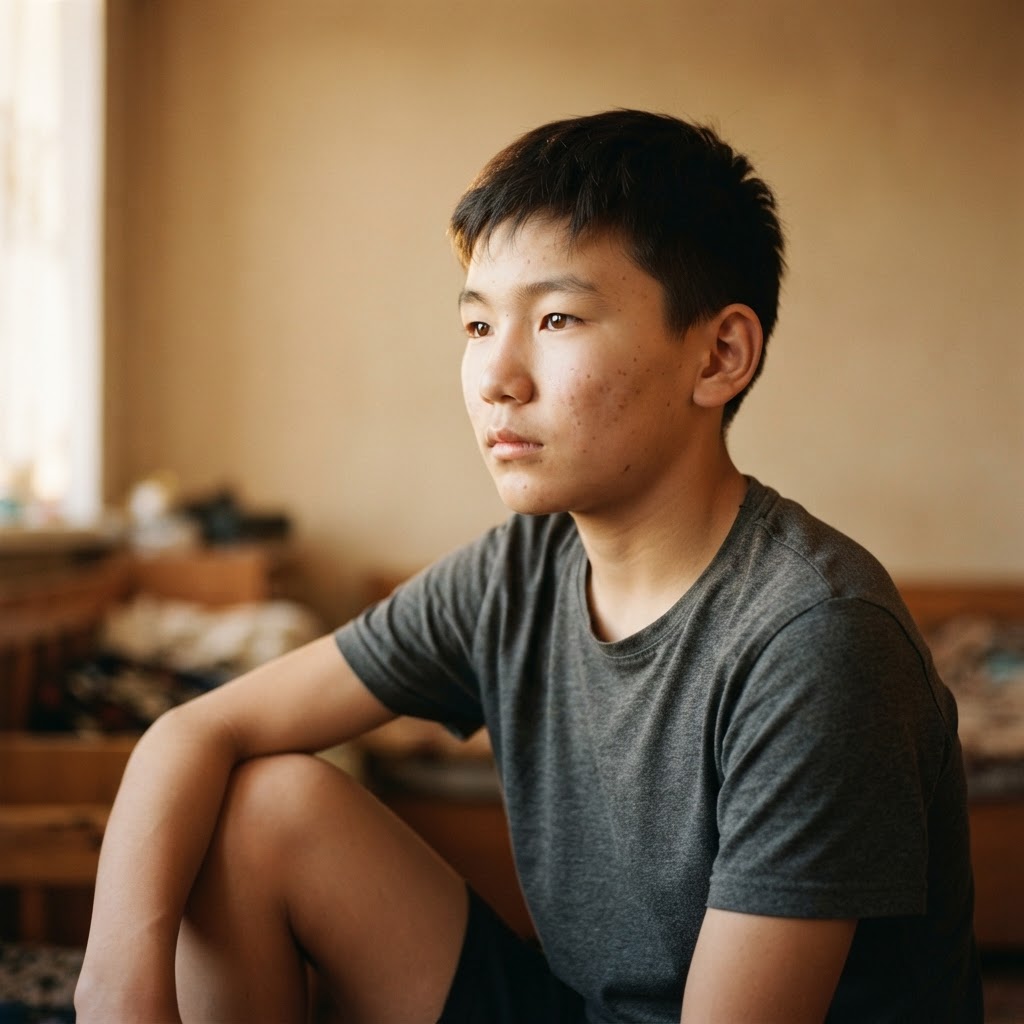
Ger Dotor was founded by Manduul Batbaatar, a Mongolian teenager living in Singapore. Far from home, he began translating for his grandmother during phone calls and teaching his younger brother Mongolian word by word — and noticed how many proverbs his grandmother used had no place in either of their vocabularies.
“I want to create a resource that helps families like mine keep this heritage alive.”